
I am constantly humbled by the majesty of nature; It is quite easy for me to become caught up in the natural wonder of life. Cats, which we will be discussing today, are no exception to this. As someone who owns two cats and has had the pleasure to work with big cats (cheetahs and tigers in my case), I do not believe I could ever grow tired of their gracefulness or their natural humor. Few animals have such charisma as the ‘cat.’
Many people share similar feelings about cats. They are, after all, remarkably common pets; roughly one third one homes in the United States and Europe house a domestic cat. Among these households and pet owners, it has become somewhat common practice to let one’s cat roam freely outside. To be frank – You should not allow your cat to go outside. At least, not unattended.
This article provides a description of the many reasons you should keep your cats inside, but the rundown is this:
Cats are an incredibly pervasive and destructive invasive species that are responsible for dozens of extinctions and the deaths of billions of other animals.
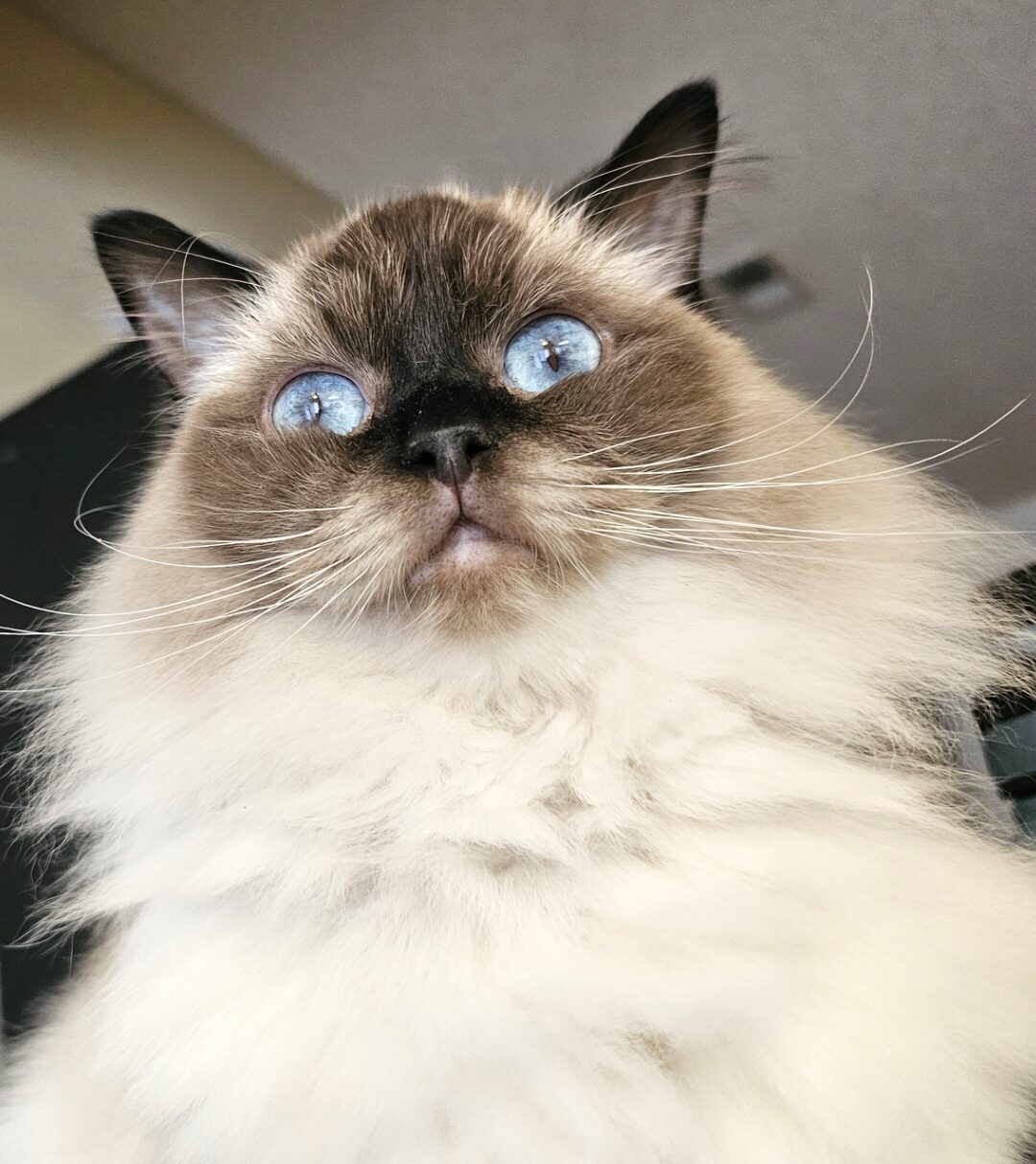
Unfortunately, your favorite poofball is one of nature’s most prolific killing machines. Even if they look like this:

This is Claire, by the way. She is a sweet girl. She would probably kill me if she was bigger.
To be perfectly clear, the damages caused by common cats (Felis catus) are not exclusive to domestic cats. Feral cats are the primary issue, but any ‘outdoor cat’ poses a threat to the local ecosystem. This is especially true of cats that have not been sterilized. Feral cat populations have reached incredible levels because humans have ferried domestic cats around the world and allowed them to breed in environments they are not natural to.
Globally, cats are estimated to have caused the extinction of 63 species. Cats in the United States kill roughly 2 billion birds every year. Cats are incredible natural predators who frequently prey on small birds, mammals, and reptiles. Commonly enough, cats will kill a prey animal and not eat it – an instinctually driven behavior.
The unfettered allowance of cats to hunt freely in environments they are not natural to poses significant ecological danger. By causing extinctions and putting pressure on struggling populations cats threaten biodiversity and risk causing trophic cascades. In essence, cats can cause ripple effects throughout food chains and ecosystems that can result in an environment’s resources being depleted, strained, or permanently altered. Cats are capable of fundamentally changing nature as we know it.
Cats can also have influence beyond direct ecological damage due to overhunting. Outdoor cats are a common vector for diseases like feline immunodeficiency virus, feline leukemia virus, and even rabies. In fact, domestic cats are the most reported animal in the United States to contract rabies. Additionally, the contraction and spread of parasites is another big concern for outdoor cats.
Much of what I described above poses significant danger to your cat, which I would hope is reason enough to keep them inside, but also puts your cat in a position to be dangerous to other animals and even humans. This isn’t the fault of cats. They are born as incredible and pervasive predators, and they just do what comes naturally. The truth is, humans are at fault for the ecological damage caused by cats. Domestic cats are so destructive that The Wildlife Society has a ten part policy about how to address them.
Some remedies which have been proposed to control outdoor cats are: encouraging responsible cat ownership, laws regulating how we treat domestic cats, collar devices to deter hunting, forced sterilization of feral cats, practices to increase adoption of feral cats, creation of cat sanctuaries, and the euthanasia of feral cats. All of these have been imposed in some places to varying degrees of success. In reality, a holistic solution that applies several different methods as needed in different areas and which has the support of local communities will have the best long term impact.
If you are considering letting your cat be an outdoor cat, I ask you please keep them inside instead. If not for their own safety then for the safety of your local environment and animal populations. The best thing you can possibly do is be mindful of the role these animals play in nature and the dramatic impact a foreign predator can have on an ecosystem.
Here is my favorite picture of Claire,

– Wyatt